
For macOS · Java · Kotlin · C# · Python · TypeScript
The code is a byproduct. The real program lives in the people who understand it.
AI now writes the code at machine speed. logPhase helps you build the understanding just as fast.
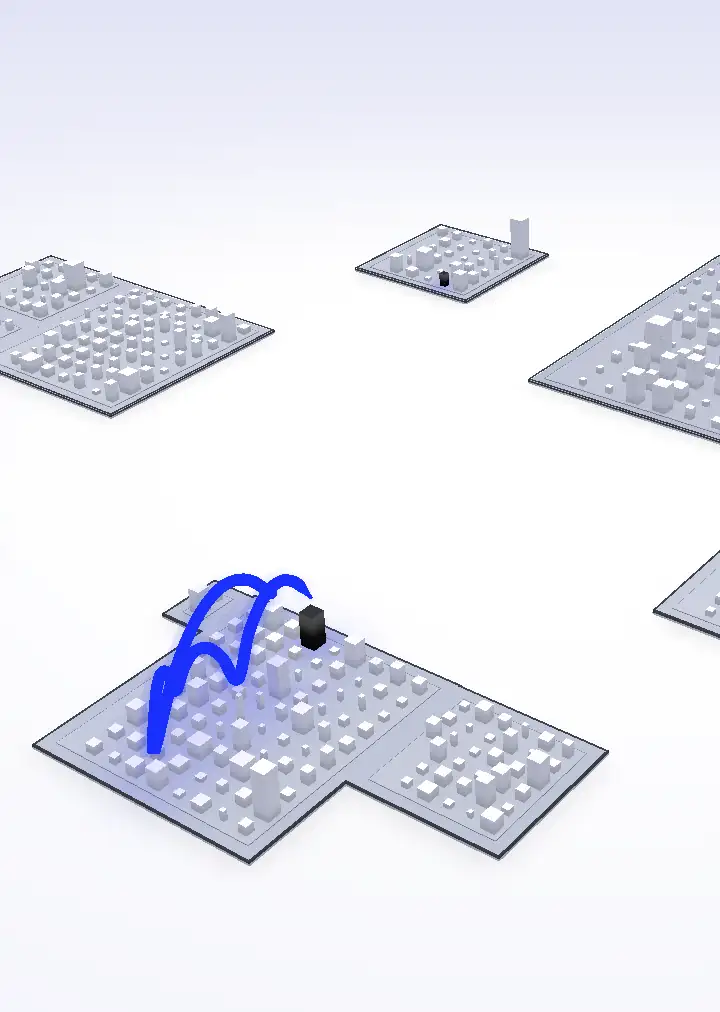
Scroll · one pull request, three user journeys
dotnet/eShop · 457 files in 6 districts · laid out by logPhase
One pull request
You get the user journeys a pull request changes, step by step, so you understand it in minutes. All videos are real screen recordings, some sped up.
dotnet/eShop #940

How a review reads
A review starts from the blast radius of a pull request. AI writes the change. You see what it did and decide what to correct.
Every pull request opens on its journeys, then goes down to the method and the lines that changed.
-

01
Paste a link
The app clones the repository, analyses both sides of the change, and starts your Claude Code on the review.
-

02
The full view first
The change comes back as a handful of user journeys, each a flow diagram Claude writes from the code. eShop pull request #940 changed two files and touched three user journeys, and its review was finished four minutes and 20 seconds after the analysis started.
-
Shopper checks out the basket
For each product, checkout asks “Is this product still in the catalog?” and logs and leaves out any line it doesn't return. -

03
The code behind a step
Select a step and press Code to see the method behind it, the
ifthat decides it, and the lines the pull request changed there.A flowchart from a chat model can't reliably show you that.
-

04
What else it touches
The call graph draws every method on the journey's path, from the analysis alone. A method's panel lists the other journeys that use it.
-

05
Dig in
Ask about any step and Claude answers from the method behind it. Split breaks a step into the smaller steps its code actually has, and Clarify asks for a plainer label. Any file opens read-only, with go to definition and a list of callers.
Asked in the same review “What happens to the order if one of its products was deleted from the catalog?”
The code city
The Canvas draws your repository as a city at night, and lights each user journey the change touches as a trail. The layout stays put between runs, so the Ordering district is where you left it yesterday.
- A district is a service
- A pad is a package
- A tower is a file, taller with more lines
- An arc is an import between districts
- A trail is one user journey
Runs on your Mac.
What runs where
- Analysis
- Java, Kotlin, Python, and TypeScript work offline.
- C#
- Microsoft's .NET SDK, fetched once, about 250 MB.
- Review
- Your own Claude Code, in a terminal you can watch.
What goes over the network
- Claude
- What it reads goes to Anthropic.
- GitHub
- Tokens stay in the macOS keychain.
- Everything else
- Git remotes and the update check.

Five languages, read by their own parsers.
- JavaSpoon
- KotlinKotlin compiler PSI
- C#Roslyn
- PythonPyright
- TypeScriptts-morph
First launch
Setup
- Claude Code
- Finds Claude Code and signs you in.
- Review plugin
- Loads the app's plugin into Claude.
- GitHub access
- For private repositories only.
Why logPhase exists
In 1985, Peter Naur wrote a short essay called Programming as Theory Building. The code is not the real product of programming. The real product is the understanding the team builds: why things are the way they are, how the code maps to the business, and which changes are safe.
When the people who hold that understanding leave, the system keeps running, but nobody can change it with confidence anymore. Naur called that a dead program.
“The death of a program happens when the programmer team possessing its theory is dissolved.”
Think about the last time you inherited a service. You didn't read it top to bottom. You asked around, traced one request by hand, broke something in staging, and slowly built the theory yourself. It took weeks.
Now AI writes the code, and nobody built the theory in the first place. logPhase is how you build it, one pull request at a time.
Write to contact@logphase.ai whenever logPhase gets your repository wrong.
Try it on your next pull request.
$15 a month
- Free for a month from the first launch. No signup or card.
- After that, Polar bills it monthly. One subscription covers all your Macs.
- Polar emails your licence key. Cancel any time in the customer portal.
Apple Silicon · 313 MB · v1.6.7. Intel Mac: download the Intel build (324 MB). Reviews need your own Claude Code.